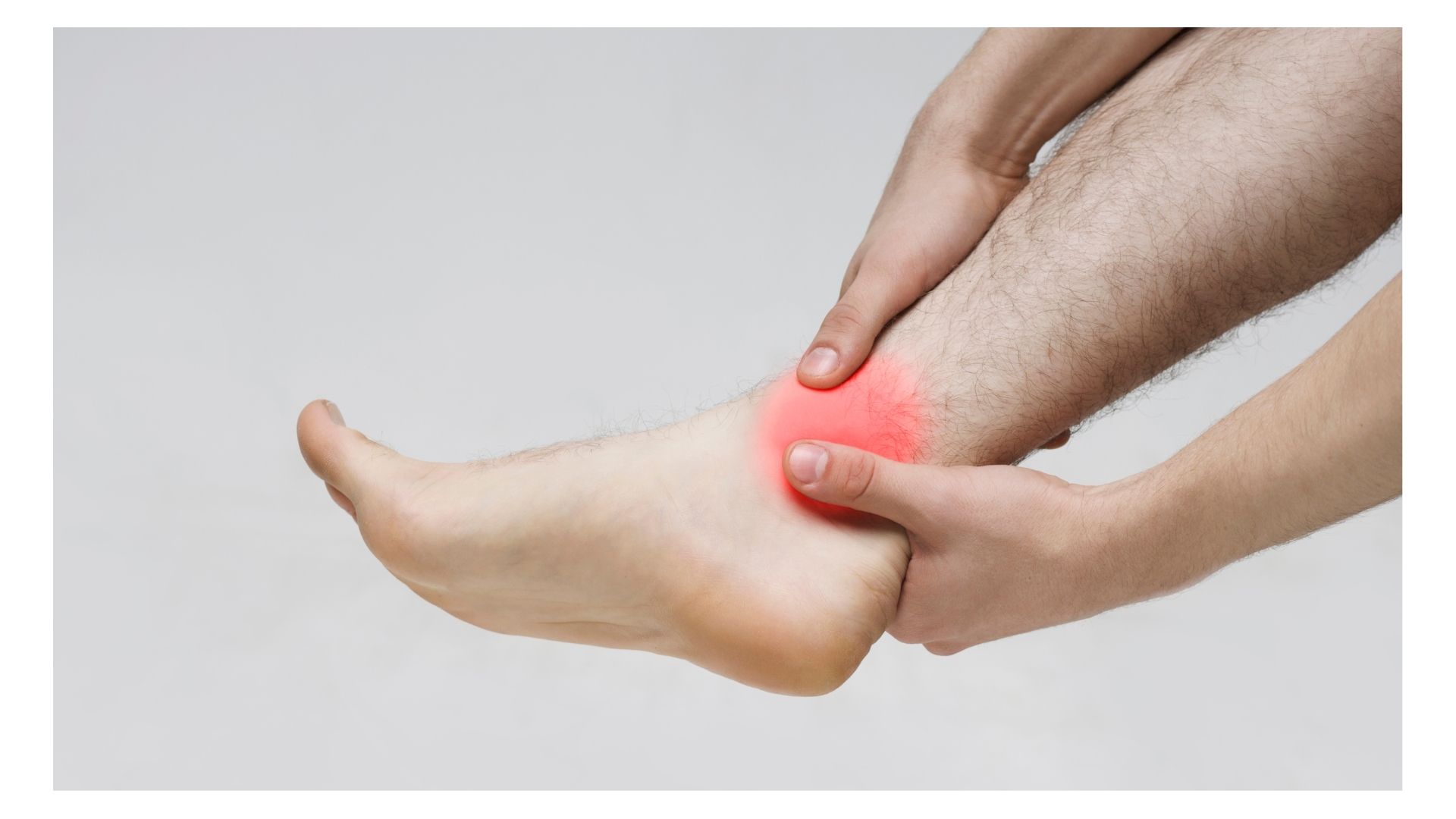
Every step you take begins at the foot. The foot and ankle are the body's first point of contact with the ground — the foundation through which every force of movement is absorbed, distributed, and transmitted upward through the knee, hip, pelvis, and spine. When that foundation isn't functioning well, the consequences don't stay in the foot. They travel.
For residents of Springdale and throughout Northwest Arkansas, foot and ankle pain is one of those conditions that's often managed locally — with rest, supportive footwear, orthotics, or anti-inflammatory medication — without anyone evaluating what the foot and ankle dysfunction is doing to the rest of the body, or what the rest of the body may be doing to the foot and ankle. That bidirectional relationship is at the heart of the chiropractic approach to lower extremity care.
At Stinson Chiropractic of Springdale, Dr. Andrew Stinson works with patients throughout Springdale, Tontitown, Elm Springs, Fayetteville, Rogers, and Bentonville who are dealing with foot and ankle conditions — evaluating the full mechanical picture from the pelvis down and building personalized care plans that address the structural and functional contributors to lower extremity pain.
The Foot and Ankle as a Mechanical System
The foot is one of the most mechanically complex structures in the body — 26 bones, 33 joints, and more than 100 muscles, tendons, and ligaments working in coordinated patterns to provide stability, shock absorption, and propulsion during every step. The ankle sits at the interface between the leg and the foot, providing the dorsiflexion and plantarflexion that drive the gait cycle forward.
When this system is functioning well, it's largely invisible. When it breaks down — through injury, overuse, structural dysfunction, or the mechanical consequences of problems above the foot — the impact is felt with every step.
What's important to understand for Springdale patients dealing with foot and ankle pain is that the foot and ankle don't operate in isolation. The mechanics of the foot during walking are directly influenced by what's happening at the hip and pelvis above — and dysfunction at the foot creates compensatory patterns that affect the knee, hip, and spine. Treating the foot without evaluating its relationship to the rest of the kinetic chain produces incomplete results.
Plantar Fasciitis and Heel Pain
Plantar fasciitis is the most common cause of heel pain in adults, producing the characteristic sharp, stabbing pain on the bottom of the heel that's worst with the first steps in the morning and after periods of rest. It develops when the plantar fascia — the thick connective tissue band running from the heel to the base of the toes — is subjected to repetitive mechanical stress that exceeds its capacity for recovery.
For Springdale runners, walkers, and workers who spend long hours on their feet, plantar fasciitis is an extremely common presentation. And while stretching and supportive footwear help, they don't address the mechanical contributors that are loading the plantar fascia beyond its tolerance — restricted ankle dorsiflexion, excessive pronation driven by weak hip abductors, and pelvic misalignment that loads one foot asymmetrically.
Dr. Stinson addresses plantar fasciitis by evaluating and treating the full lower extremity chain — ankle joint mobilization to restore dorsiflexion, pelvic adjustments to correct asymmetrical loading, soft tissue work to the plantar fascia and calf, and targeted rehabilitation to rebuild the muscular support that reduces fascial strain.
Ankle Sprains and Chronic Ankle Instability
Ankle sprains are among the most common musculoskeletal injuries across all age groups, and they're particularly prevalent among active adults and athletes — including many of the patients we see for
sports injuries throughout Fayetteville, Rogers, Bentonville, and Springdale. The lateral ankle ligaments — the ATFL and CFL — are the most frequently injured structures, typically through an inversion mechanism that rolls the foot inward.
What many Springdale patients don't realize is that inadequately rehabilitated ankle sprains leave behind more than stretched ligaments. They produce proprioceptive deficits — disruptions in the ankle's ability to accurately sense its position in space — that persist long after the pain has resolved and that significantly increase the risk of repeat sprains. The ankle that keeps rolling is almost always an ankle whose proprioceptive and neuromuscular rehabilitation was never properly completed.
Chiropractic care for ankle sprains includes restoration of normal ankle and subtalar joint mechanics through specific adjustments, soft tissue therapy to address the injured ligaments and surrounding musculature, and a rehabilitation program that systematically rebuilds proprioception and peroneal strength to prevent recurrence.
For patients dealing with chronic ankle instability — the sense that the ankle is unreliable, that it rolls easily, that it can't be trusted on uneven terrain — this neuromuscular rehabilitation component is the most important and most frequently missing element of their previous care.
Achilles Tendinopathy
The Achilles tendon — the largest and strongest tendon in the body — connects the calf musculature to the heel and transmits the powerful forces of calf contraction during push-off in walking and running. Achilles tendinopathy develops when the tendon is subjected to repetitive load that exceeds its capacity for adaptation, producing the characteristic pain and stiffness at the back of the heel that's worst in the morning and after activity.
For NWA runners and active adults in Springdale who are dealing with Achilles tendinopathy, the management approach matters enormously. Rest alone doesn't rehabilitate a degenerative tendon — it simply reduces the load temporarily. The tendon needs progressive loading through an appropriate eccentric exercise protocol to stimulate the collagen remodeling that produces genuine tissue recovery.
Dr. Stinson combines specific calf and ankle adjustments to normalize the mechanical environment of the tendon, soft tissue therapy to address the muscular tension that increases Achilles load, and a progressive loading protocol that drives tendon adaptation without exceeding its current tolerance.
Overpronation and Flat Feet
Overpronation — the excessive inward rolling of the foot and ankle during weight-bearing — is one of the most common lower extremity mechanical patterns seen in Springdale chiropractic practice, and one of the most significant contributors to a range of conditions beyond the foot itself. Overpronation drives tibial internal rotation, promotes knee valgus, loads the medial knee asymmetrically, and contributes to pelvic imbalance that affects the entire lower extremity chain.
Flat feet — pes planus — can be structural (the arch never fully developed) or functional (the arch collapses during weight-bearing despite adequate structural support). Functional flat feet are often driven by weak intrinsic foot muscles, inhibited tibialis posterior, and the proximal muscle weakness that allows the ankle to pronate excessively under load.
Chiropractic care for overpronation and flat feet focuses on restoring proper midfoot and subtalar joint mechanics, addressing the proximal contributors — hip abductor weakness and pelvic alignment — that drive compensatory pronation, and rebuilding the intrinsic foot strength and tibialis posterior function that support the arch during activity.
Midfoot and Forefoot Pain
Metatarsalgia — pain in the ball of the foot — is common in Springdale patients who spend significant time on their feet or who have altered foot mechanics that concentrate load on the metatarsal heads. Morton's neuroma, stress fractures, and sesamoiditis are additional forefoot conditions that benefit from the combined approach of joint mobilization, soft tissue therapy, and biomechanical correction.
For conditions in this category, chiropractic assessment of the entire kinetic chain — identifying whether altered mechanics at the ankle, knee, or pelvis are contributing to abnormal forefoot loading — is essential for addressing the cause rather than just the symptoms.
The Ankle-Spine Connection
One of the most important — and most underappreciated — relationships in lower extremity mechanics is between ankle mobility and lumbar spine function. Restricted ankle dorsiflexion is one of the strongest predictors of lower back pain in active adults, because the body compensates for inadequate ankle mobility by pronating the foot, rotating the tibia, and increasing lumbar flexion during squat and gait patterns.
For Springdale patients who've been treated for
lower back pain without resolution, restricted ankle dorsiflexion — often residual from old sprains or simply from years of wearing footwear that limits ankle range of motion — is worth evaluating as a contributing factor. Restoring ankle mobility through specific joint adjustments can produce meaningful improvements in lumbar mechanics and
lower back and nerve symptoms.
This bidirectional relationship is why Dr. Stinson's assessment of foot and ankle patients always includes evaluation of the lumbar spine and pelvis, and why his assessment of lower back patients always considers the foot and ankle as part of the full mechanical picture.
What to Expect at Stinson Chiropractic of Springdale
New patients presenting with foot and ankle complaints at Stinson Chiropractic begin with a thorough evaluation — including postural assessment, gait analysis, lower extremity alignment, ankle and foot joint mobility testing, and assessment of the proximal mechanical contributors in the hip, pelvis, and lumbar spine.
Dr. Stinson takes time to understand the full history of the complaint — the onset, the pattern, what makes it better or worse, what activities are being limited, and what the patient's goals are for their recovery. From that evaluation, he develops a personalized care plan that's specific to the patient's presentation rather than a standard foot pain protocol.
For patients throughout Springdale, Tontitown, Elm Springs, Fayetteville, Rogers, and Bentonville, same-day appointments are often available. Stinson Chiropractic accepts most major insurance plans — call to confirm your coverage.
Fix the Foundation in Springdale
When the foot and ankle aren't functioning well, nothing above them can function optimally either. For patients throughout
Springdale and Northwest Arkansas who are ready to address foot and ankle pain at its structural and mechanical root — not just manage the symptoms — Stinson Chiropractic of Springdale is accepting new patients. You can also explore our related guides on
knee pain and
hip and pelvis pain, or
contact our office with any questions.
Call today:
(479) 396-5117
📍 1071 Har-Ber Lakes Dr #2, Springdale, AR 72762
🌐 stinsonchiro.com

 Translate